

Person Centred Care: Inviting Participation
Person-centred care invites people to celebrate.
Many people living with dementia say that they want more choice, influence, and control over decisions about their lives and the support they receive. A big barrier to this happening is an unintentional attitude that the person living with dementia is just a passive recipient of care. The gradual erosion of control that many people living with dementia experience means we need to create more equal relationships (Bray, 2018). We can do this by inviting people to participate in their own care.

Sanjay’s Story
I think one of the most person-centred things we can do is not to wake our residents up in the morning. We let them wake up naturally, and we take it upon ourselves to invite each person to join in getting up and dressed once they have woken up.
At the very least, they are more awake and can participate in activities more effectively! It sounds simple, but our people are happier, less aggressive, and go through their morning routines so much better.

What Do We See in Sanjay’s Story?
Sanjay provides us with a lovely example of how offering an invitation to participate can move us away from a task-oriented approach
Sanjay is focusing on the well-being of real people and how they experience the morning, not on his list of tasks to be done to ‘bodies’.
Sanjay is offering choice and negotiation, rather than saying “take it or leave it”
Sanjay is “doing with” rather than “doing to”
Sanjay is getting to know the people and their preferences
Sanjay’s approach feels warm and respectful.
Sanjay’s approach is taking the battle out of the morning!

A Special Charter of Rights
Janusz Korczak was an extraordinary doctor and educator who was a pioneer of children’s rights. He set up an orphanage for Jewish children in Warsaw, and in 1942, he chose to accompany the children in his care when they were sent to the Treblinka death camp.
Almost 100 years after Dr Korczak wrote his list of rights in the 1920s, Jiska Cohen-Mansfield (2021) visited his memorial. Dr Cohen-Mansfield was struck by how useful Dr Korczak’s ideas are when we are thinking about our support for people living with dementia. Dr Korczak’s list overlaps with person-centred care, despite writing many years before we knew that term!
Let’s look at some of these rights and how seeking opportunities to invite the people we support to participate might help us embody them.

Tip 1: A Right to Love and Appreciation
Inviting the person we are supporting to participate can help create caring social interactions and show that we appreciate them.
Think about inviting a friend over for dinner. Our invitation to dinner is not just about offering food; it is about offering our company and enjoying their company. Even in our most formal invitations to social events such as weddings, we use phrases like “request the pleasure of your company”.
This can be an important thing to convey in our invitation to the people we support– we are looking forward to doing this together, and we will enjoy their company.
When have you seen someone with dementia being invited to participate in something as if they were a respected person whose presence would be valued, versus being a customer or consumer of health services who is told ‘take it or leave it’?

Tip 2: A Right to Optimal Environment
An approach that offers an invitation to participate is proactively helping to provide an environment that offers the person living with dementia:
– companionship and caring
– meaningful activities to prevent or reduce boredom,
– a sense of dignity in care,
– and support to retain their abilities as long as possible (Cohen-Mansfield, 2021).

Tip 3: A Right to Respect
If you wanted your boss to do something, would you just tell them that they have to do it? Probably not, because that would seem disrespectful. You would ask.
In the same way, inviting a person living with dementia to participate can feel more respectful of the person we are supporting.
Sometimes people can react badly to being told what to do. They may be more likely to say yes to an invitation than they are to a ‘command’.
When have you seen people with dementia being expected to do something and to do it now? “Come on, it’s time to get out of bed. Up you get” is not an invitation!
We can see that Sanjay shows respect for the people by inviting them to get up when they are ready. Things go better.
Tip 4: A Right to be Themselves
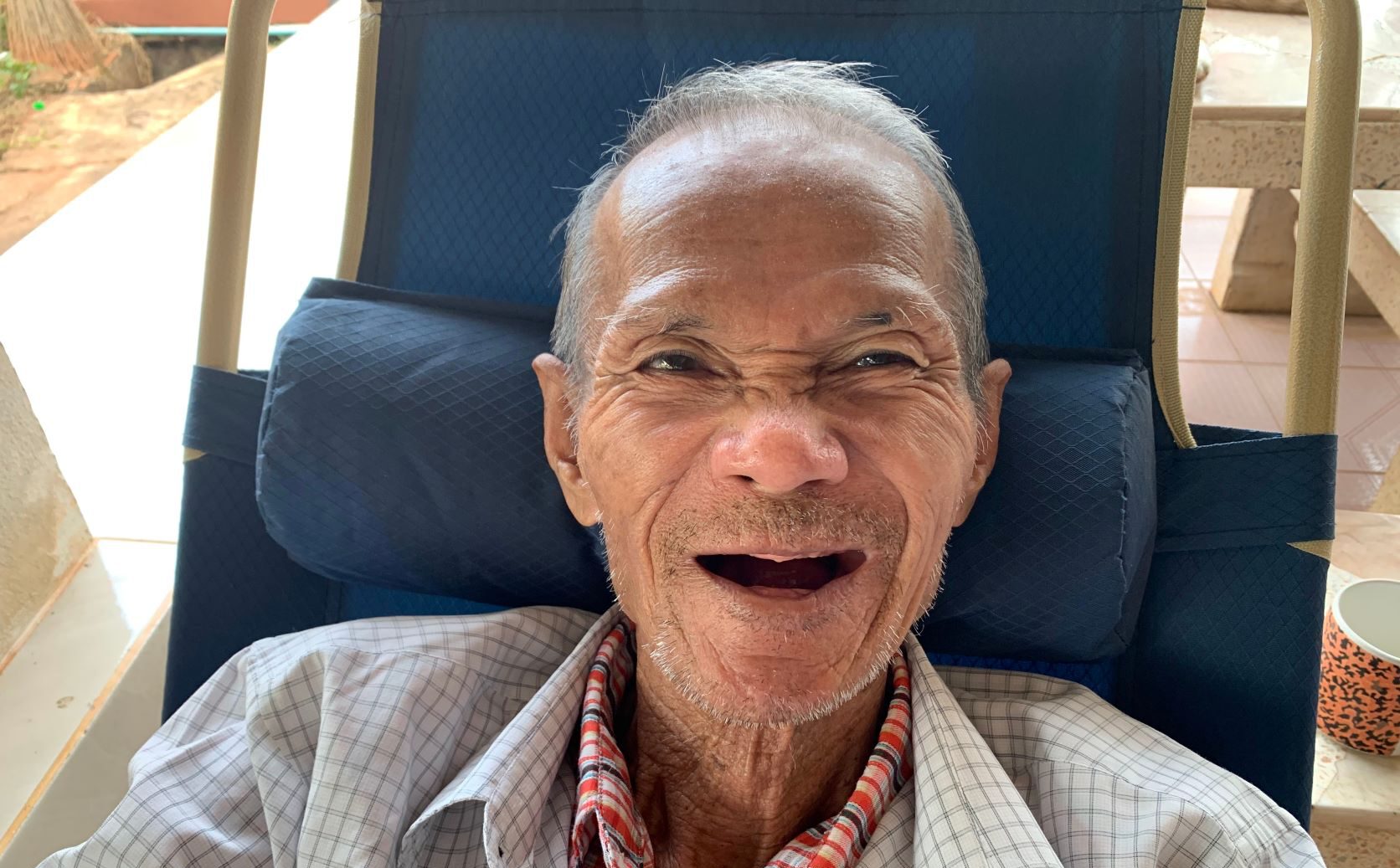
We would want our physical environment, where we live, to reflect who we are. The same is true for our support. We want to create a care environment that feels comfortable and reflects the individual preferences and personality of the person living with dementia.
We could see how Sanjay’s approach helped the support team on the morning shift reflect the resident’s routines and preferences.
When we invite people to participate, it can reinforce their sense of self, for example, by continuing to do familiar things, having control, talking about and doing things that are meaningful to them, and feeling useful.
You might have had an experience at primary school of being so proud to be given a job to do. How did you feel – responsible, grown-up, important, part of a team? It was probably a boost to your self-esteem! Yet when you look at the task now, it may seem like a very simple little chore. It’s not the size of the participation, it’s how it makes people feel.

Tip 5: A Right to Desire, to Claim, to Ask
Sometimes the pressures of the day leave us reduced to just thinking about what we think people need and the task at hand.
An invitation can be a chance to listen.
We want the person we are supporting to feel able to openly express their opinions and wishes without fear of being judged or dismissed. We want them to feel listened to and understood, and for their views to be respected and heard (Alzheimer’s Society Canada, 2015).

Tip 6: A Right to Make Mistakes and a Right to Fail
We never actually know what a person has in them or what they are able to do unless we give them an enabling space and opportunity to try – inviting them to participate is one way to do this.
Sometimes they might fail.
We have to weigh up the harm, the actual risk, and who it is a risk to. We need to walk in the person’s shoes, not our own – our worries might not be what distresses the person. The risk to the person of not having these opportunities might be much greater.
We can think about managed risk and how we can break down some of the barriers.

Tip 7: A Right to Self-Determination
Using an approach that invites participation in our day-to-day work can help to maintain self-determination. What does self-determination or autonomy mean to people living with dementia?
It means maintaining their independence and self-expression as much as possible (Wolfe et al., 2021)
It means accepting help but being included and having opportunities for connection (Wolfe et al., 2021).
It means that other people don’t assume they can make decisions for the person living with dementia in their life and in their care (Döpp, 2021).
Inviting people to participate is part of ensuring that the person living with dementia can influence what happens and make decisions.
Looking for ways to offer choices to the person living with dementia can be an invitation to participate and make their own decisions, for example, when a care-worker holds up two shirts and says, “Would you like to wear your blue shirt or your green shirt today?”